
Sealants in San Tan Valley, AZ
A protective coating painted onto the grooved back teeth, smoothing them out and helping prevent decay where children get it most.
The back teeth have grooves narrower than a toothbrush bristle, which is exactly where most children's cavities begin. A sealant fills them in so nothing can settle there.
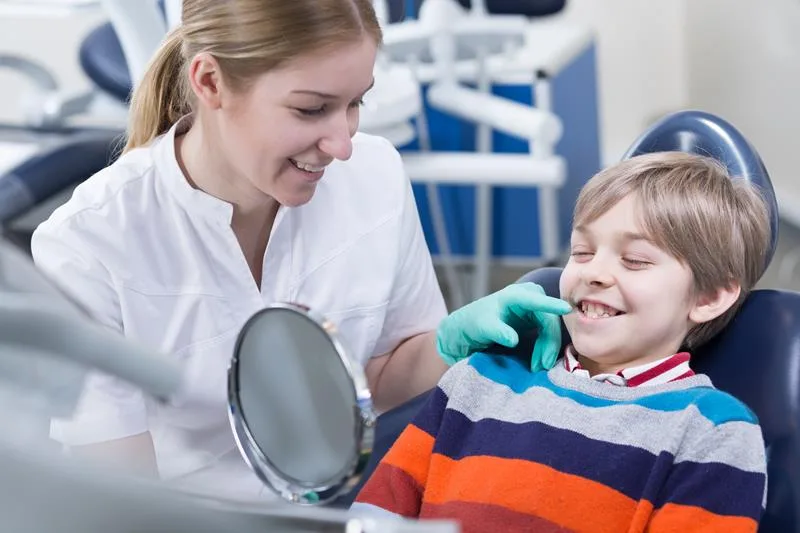
About Children's Sealants
Dental sealant is a plastic coating painted on your teeth. It attaches to your child's teeth, smoothing the rough edges, depressions, and grooves that are typically found on teeth. It gives your child's teeth a protective coating, helping to prevent tooth decay and cavities. Sealants are usually done on the back teeth since they are hard to reach and very irregular. Even if your child brushes and flosses properly, he or she may miss some areas. For this reason, sealants are a good way to protect your child's teeth.
- Protects the grooves where children's cavities start
- No drilling and no numbing required
- Takes only a few minutes per tooth
- Applied to the back teeth, which are hardest to clean
- Checked at routine visits and re-applied as needed
Benefits of Sealants for Children
Most cavities in children form on the chewing surfaces of the back teeth, and the reason is structural rather than behavioural — the grooves there are physically too narrow for a toothbrush bristle to enter. Even a child who brushes well cannot clean the bottom of them. A sealant removes that vulnerability. It is also one of the easiest appointments in dentistry. No drilling, no injection, nothing uncomfortable. For a child who is nervous, an appointment where nothing unpleasant happens is genuinely valuable — it builds trust that pays off if they ever do need treatment. Compared with the filling it prevents, a sealant is faster, cheaper and leaves the tooth completely intact.
How Sealants Are Applied
The tooth is cleaned and dried. A gel is applied for a few seconds to roughen the enamel very slightly so the sealant grips, then the tooth is rinsed and dried again. The liquid sealant is painted into the grooves and hardened with a curing light. It takes a few minutes per tooth, involves nothing that hurts, and your child can eat straight afterward. Sealants wear gradually under chewing and can chip, so we check them at every routine visit and re-apply where needed. They protect the chewing surface only — the sides of the teeth and the gumline still need brushing and flossing.
Common Questions
When should my child have sealants placed?
Do sealants hurt?
How long do sealants last?
Does my child still need to brush with sealants?
Can sealants be placed over an existing cavity?
Terms You May Hear
- Sealant
- A thin protective coating bonded into the grooves of a back tooth's chewing surface to prevent decay.
- Molars
- The large back teeth used for grinding food. Their grooved surfaces make them the most cavity-prone teeth in a child's mouth.
- Fissures
- The narrow grooves across the chewing surface of a tooth, too fine for a toothbrush bristle to clean.
Ready to Schedule Your Appointment?
Ask about sealants at your child's next cleaning — they are quick and completely painless.