
Night Guards in San Tan Valley, AZ
Custom-fitted guards that protect your teeth from the wear and fracturing caused by grinding and clenching during sleep.
Most people who grind their teeth do it in their sleep and have no idea until the damage shows up. A night guard puts a protective layer between your teeth so the wear happens to the guard instead.
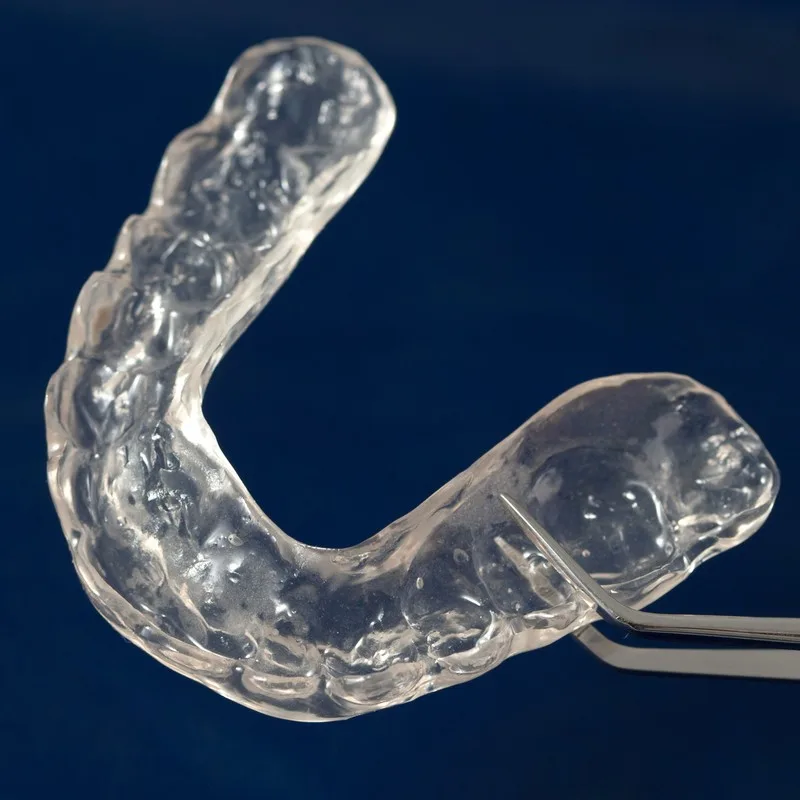
About Night Guards
It can be beneficial to use a guard, or covering, to protect your teeth from grinding while sleeping. Similar to how a mouthguard protects teeth during sports, this layer prevents damage to the teeth that can occur naturally. There are a wide variety of different types of mouthguards, ranging from pre-formed pieces to ones that are custom fitted to your teeth and jaws. Some of these can even be formed at home through a boil-and-bite process.
- Protects enamel from grinding wear during sleep
- Custom-fitted guards are more comfortable and stay put
- Can ease morning jaw soreness and headaches
- Protects existing crowns, veneers and fillings
- Grinding damage is permanent — the guard prevents it
Benefits of Wearing a Night Guard
Enamel does not grow back. Years of nightly grinding flattens the biting surfaces, thins the enamel and can crack teeth outright — and every bit of that is permanent. A night guard takes the wear instead, and a guard is far cheaper to replace than a tooth. Many patients also notice the symptoms they had stopped attributing to their teeth: morning jaw soreness, tension headaches, aching around the temples, and teeth sensitive to cold. Those often improve once the jaw muscles are not working through the night. If you have had crowns, veneers or large fillings, a guard protects that investment too. Grinding forces are a common reason restorations chip or come loose earlier than they should.
Custom-Fitted vs Over-the-Counter
Getting a custom guard is straightforward: we take an impression or scan of your teeth, and the guard is made to fit your bite precisely. At a follow-up visit we check the fit and adjust it so it sits comfortably and your bite meets evenly against it. The difference from a boil-and-bite guard from a pharmacy is fit and durability. A custom guard is thinner where it can be and thicker where it needs to be, stays in place through the night, and is made from material that stands up to sustained grinding. Store-bought guards are bulkier, wear through faster, and are commonly abandoned because they are uncomfortable enough to disturb sleep. Rinse it each morning, brush it gently, and keep it in its case away from heat. Bring it to your checkups so we can inspect it — how a guard wears tells us a lot about how hard you are grinding.
Common Questions
How do I know if I grind my teeth?
Is a custom night guard worth it over a store-bought one?
Will a night guard stop me grinding?
How long does a night guard last?
Can I wear a night guard with crowns or veneers?
Terms You May Hear
- Bruxism
- The clinical term for grinding or clenching the teeth, which often happens during sleep without the person being aware of it.
- Occlusal Guard
- Another name for a night guard — a removable appliance worn over the teeth to absorb grinding forces.
- Attrition
- Loss of tooth structure caused by tooth-against-tooth contact, the characteristic wear pattern produced by grinding.
Ready to Schedule Your Appointment?
Waking up with a sore jaw or headaches? Mention it at your next visit — grinding leaves signs we can spot.