
Fillings in San Tan Valley, AZ
Tooth-colored composite fillings that repair decay and cracks while blending with your natural teeth.
A filling repairs a tooth damaged by decay or a crack, restoring its shape and function. Composite fillings match the color of your tooth, so the repair is not obvious when you smile or laugh.
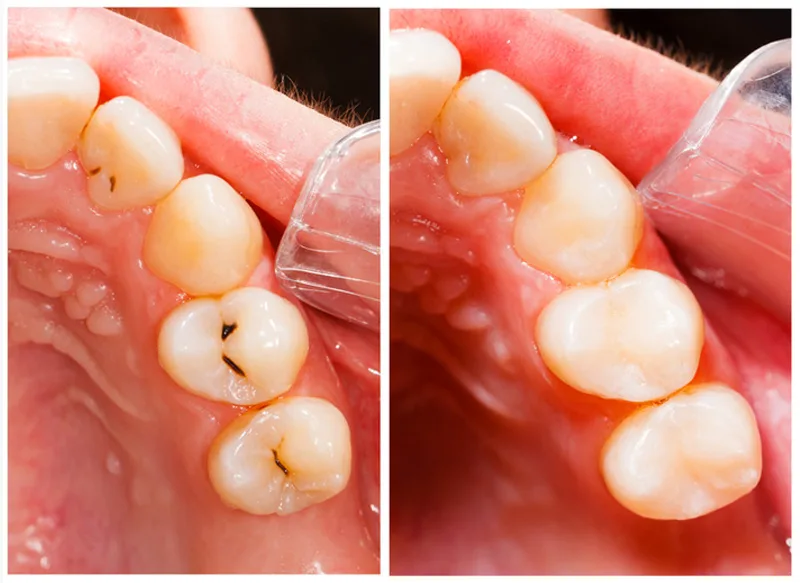
About Composite Fillings
Composite fillings act as a dentistry solution for problems such as tooth decay or cracks. A composite filling is a tooth-colored plastic and glass mixture used to restore decayed teeth. This procedure is also utilized for cosmetic improvements of the smile by fixing any discoloration or reshaping any disfigured teeth.
- Tooth-colored material that blends with your natural enamel
- Bonds directly to the tooth, conserving healthy structure
- Usually completed comfortably in a single visit
- Also used to reshape or improve the look of a tooth
- Sedation available if dental work makes you anxious
Benefits of Composite Fillings
The most immediate benefit is appearance. Composite is shaded to match your tooth, so a repaired molar or front tooth looks like a tooth rather than a patch of metal. For anything visible when you talk, that difference is significant. Composite also bonds chemically to the tooth, which means less healthy structure has to be removed to hold the filling in place. Older materials relied on mechanical shaping for grip, so more of the tooth had to go. Keeping more natural tooth is the single best predictor of how long that tooth lasts. Because it bonds, composite can also rebuild a tooth's shape — closing a small gap, repairing a chipped corner, or smoothing an uneven edge — in the same appointment as the repair itself.
What to Expect
The area is numbed first, then the decayed or damaged portion of the tooth is removed and the surface is cleaned and prepared. Dr. Gifford matches the composite shade to your surrounding teeth before placing it. The material is placed in layers, each one hardened with a curing light before the next is added. Layering is what allows the filling to be built to the exact contour of your tooth. Once complete, the filling is shaped and your bite is checked and adjusted so it feels natural when you close. Composite hardens fully during the appointment, so you can eat as soon as the numbness wears off. Some temporary sensitivity to hot and cold is normal for a few days. If you are nervous about treatment, nitrous oxide is available and works well for routine fillings.
Common Questions
How long do composite fillings last?
Will my filling be noticeable?
Does getting a filling hurt?
Can I eat right after a filling?
What happens if I leave a cavity untreated?
Terms You May Hear
- Composite
- A tooth-colored mixture of plastic resin and fine glass particles used to fill and rebuild teeth. It bonds directly to tooth structure.
- Cavity (Caries)
- A hole in the tooth caused by bacteria producing acid that dissolves enamel. Once a cavity forms, it cannot heal and must be repaired.
- Curing Light
- A focused light used to harden composite material once it has been shaped, setting each layer in seconds.
Ready to Schedule Your Appointment?
Think you might have a cavity? Call (480) 581-7681 — small cavities are quick to fix, and they do not stay small.